Best Time to Visit Rishikesh, India: Weather, Events & Travel Tips (2025 Edition)
Organising a tranquil yet exciting vacation in 2025? You need look no further than the famous locations of Rishikesh and the neighbouring Haridwar, which epitomise Indian spiritual and cultural tourism. Rishikesh, which is tucked away in the Himalayan foothills and flows beside the revered Ganges River, is a must-see for anyone looking for both peace and excitement.
This Uttarakhand town, which is a major hub for Rishikesh Haridwar tourism, offers something for all types of visitors. Before you pack your bags, the Rishikesh Travel Guide 2025 provides all the information you require, including where to go, where to stay, what to eat, and how to truly experience Rishikesh travel.
Best Time to Visit Rishikesh.
One must decide what kind of vacation they want before deciding when to visit Rishikesh. Is it for the pure love of nature, recreation, or spirituality? The different degrees of tolerance for heat and cold should also be taken into account. Lastly, it is necessary to consider Rishikesh's different winter, summer, and monsoon seasons.
Winter lends ice to the landscapes, summer illuminates the surroundings, and the monsoon offers beauty to the plains. Every unique era leaves a lasting impression and leaves something significant in its wake. Tourism in Rishikesh is truly amazing and a must-see destination.
For a breakdown of each season, continue reading!
Peak season - March - May
Season of the Shoulders: October - February
Low season - June - September
Minimum/Maximum Seasonal Temperature
Winter: chilly
8 to 34°C from October to February
Summer: hot and muggy
14 to 39°C from March to May
Monsoon - Heavy rainfall
June to September-24 to 35 degrees Celsius
Weather
Summer time in Rishikesh (March to May)
Temperature: Throughout the summer, the air temperature ranges from 14°C to 39°C.
Weather: During the summer, Rishikesh experiences hot, muggy weather with occasional flashes of intense heat. The city's summers can be especially taxing and tiring because of its location. It can get fairly sticky when there are warm winds and moisture in the air.
Wintertime in Rishikesh (October to February)
Temperature: Throughout the winter, the air temperature ranges from 8°C to 34°C.
Weather: Winter is often regarded as the best season to visit Rishikesh. The air is crisp and fresh, which is a wonderful treat for the lungs. The weather is lovely and cool, making it the ideal place to satisfy your wanderlust. When appropriately attired, the weather is perfect for exploration and discovery.
In the monsoon season (June to September), Rishikesh
Temperature: 24 to 35 degrees Celsius are typical throughout the monsoon season.
Weather: The monsoon season has nice temperatures and the 'climate status' of being breezy and relaxing. The rain, wind, fog, and mist make for the perfect setting for reflection and tranquility. However, landslides and floods are examples of severe meteorological events that could occur. For those seeking a fresh viewpoint, now is the ideal time of year to visit Rishikesh.
Places to visit in Rishikesh
Neelkanth Mahadev Temple
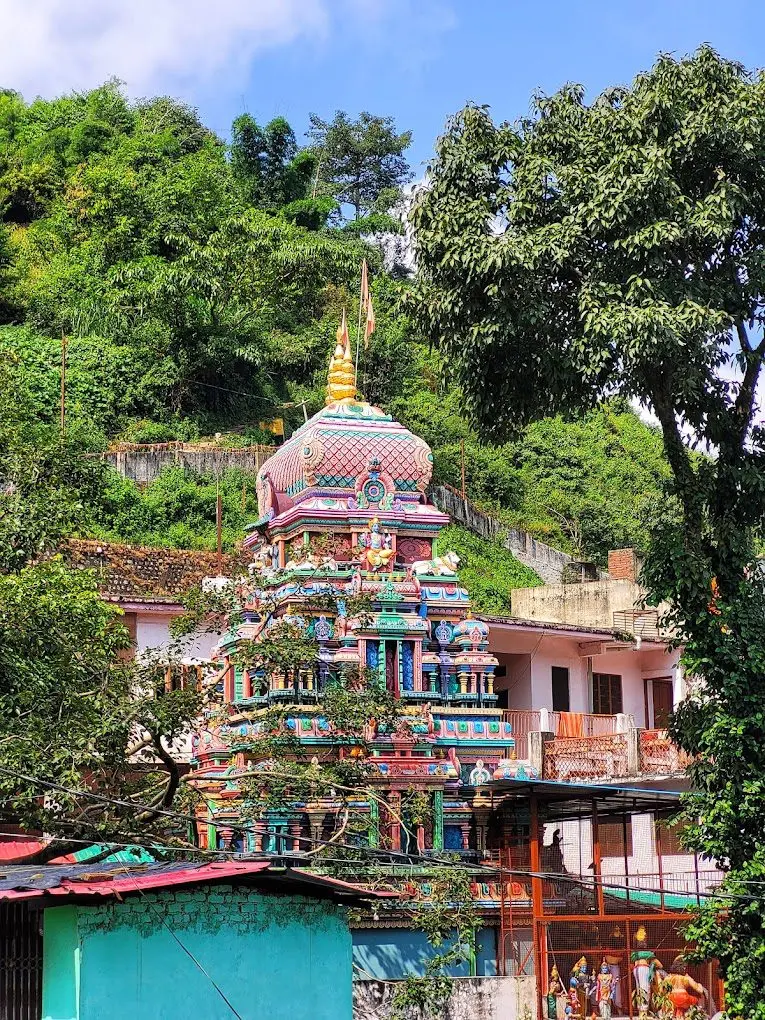
The temple dedicated to Neelkanth Mahadev The shrine of Neelkanth Mahadev is situated on the hilltop of Swarg Ashram at a height of 1675 meters. One of the most well-known temples in Rishikesh is the Neelkanth Mahadev temple. There are temples in practically every part of the Himalayan Range, and most of them have a strong connection to Hindu mythology.
Lord Shiva is the principal deity at the temple dedicated to Neelkanth Mahadev. In order to protect the world from evil, death, and devastation, Shiva drank up the venom that was churned out of the ocean there, according to Hindu mythology.Neelkanth Mahadev's temple is surrounded by forests and snow-capped mountains 12 kilometers from Rishikesh.
The Neelkanth Mahadev temple hosts two fairs: one during the month of Shravan in July and August, and another during Shivratri. Thousands of devotees flock on Shivratri. The Parvati temple, which is situated atop a large hill, is two kilometers uphill from the Neela Kantha temple. There is a modest temple in a cave (gufa), which is about 2 kilometers up the hill. Along the walk, there are some nice sights. The trip to the cave is very straightforward, but the climb to the Parvati temple is rather challenging.
“Also read - Top 5 Dreamy Getaways by boonies
Rishikesh's Triveni Ghat: Triveni Ghat Ganga Aarti
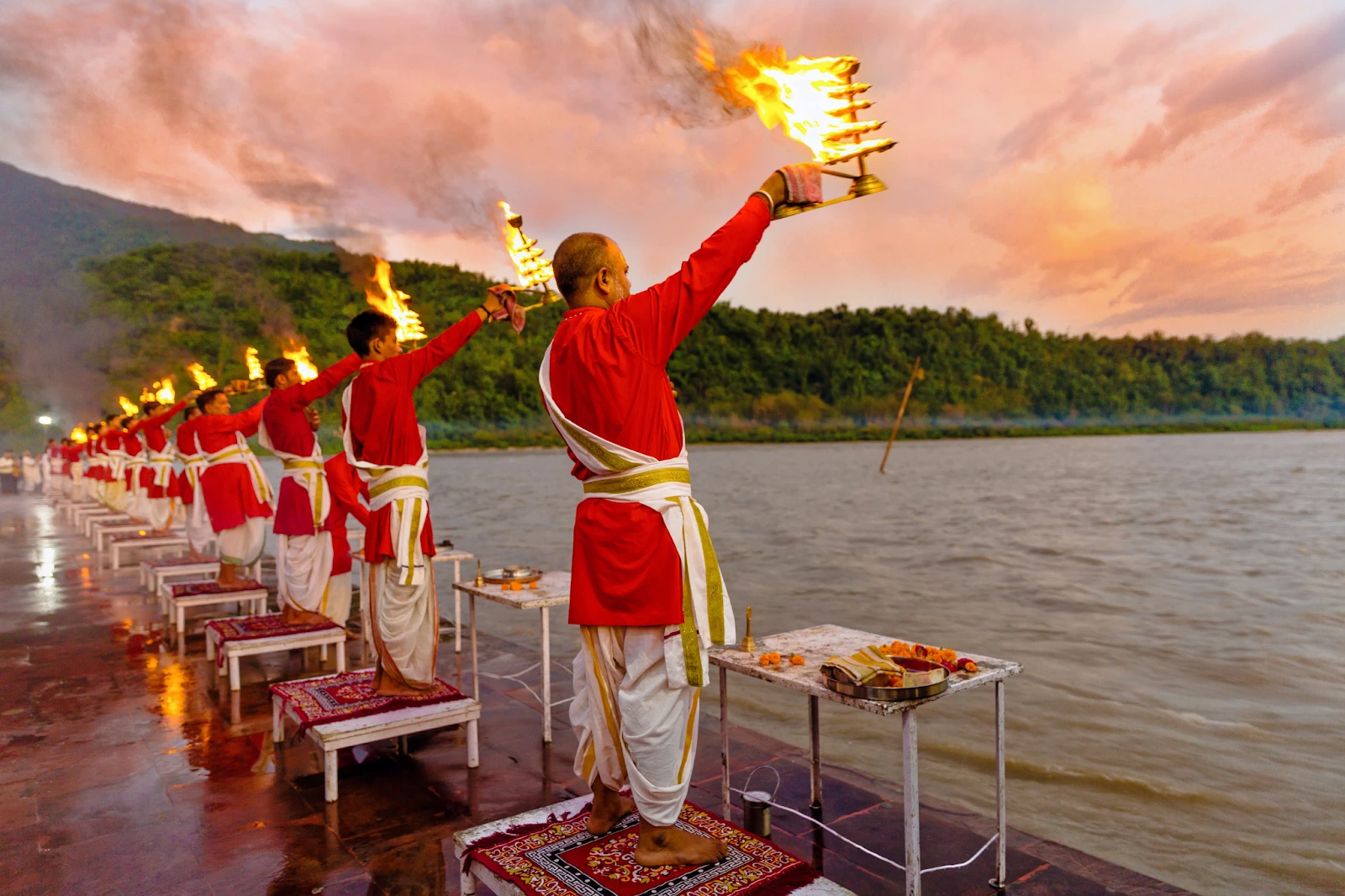
The holy Ganges River runs alongside Triveni Ghat. The majority of pilgrims took their baths in this frightful ghat. The evening Aarti of Goddess Ganga, popularly known as 'Maha Aarti,' is the attraction's primary daily event. During aarti, you may observe the devotees offering prayers.
It is said that people who dip in Triveni Ghat will be freed from all sins committed because the water there has the ability to cleanse them. At Triveni Ghat, devotees make a variety of offerings. At dawn, they bring milk to the river and happily feed the fish in the ghat. After dusk, it's aesthetically nice to see the magnificent lamps floating in the river as part of the Aarti ceremony.
Places to visit Triveni Ghat - The primary attractions of Triveni Ghat are the Gita Mandir (Temple), Bharat Mandir (Temple), and Laxmi-Narayan Temple.
There is a market in Triveni Ghat as well. There are gems, precious and semi-precious stones, trinkets, clothes, puja items, CDs, and tapes. Along the tiny lanes are stores selling jewelry, bangles, kullu topis, Nehru jackets, kurtas, salwar kameez, and religious items.
Vashishta Gufa / Vashishta Cave, Rishikesh
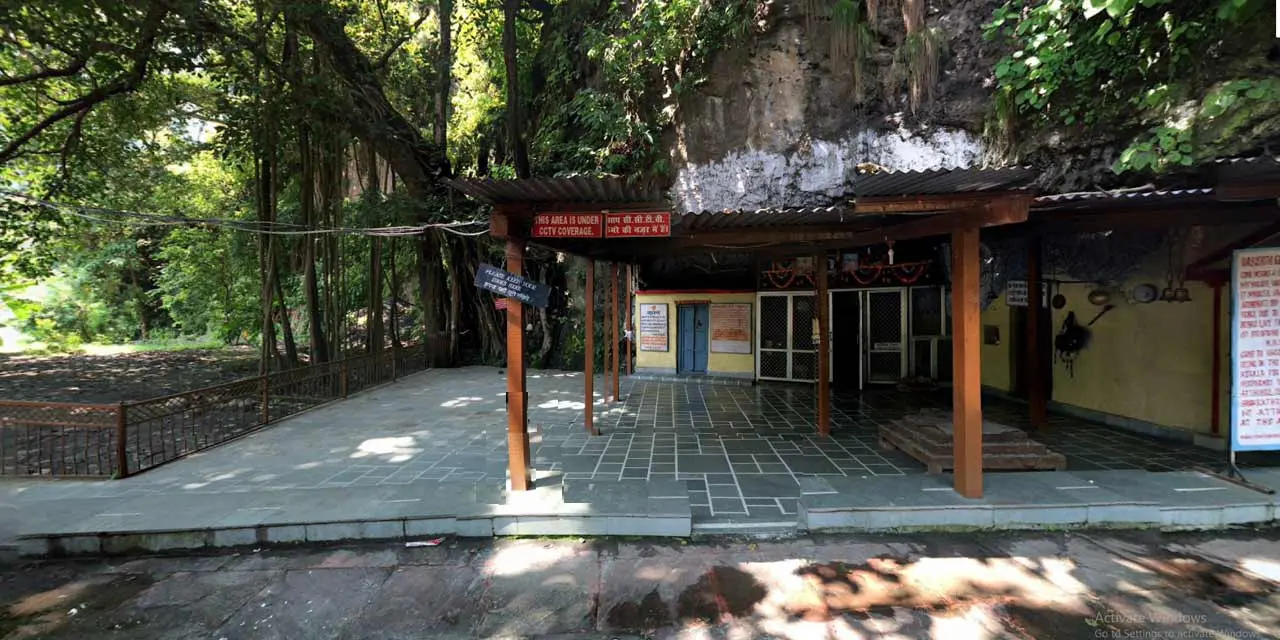
Vashishta Gufa, also known as Vashishta Cave, is an old cave on the Uttarakhand-Rishikesh-Badrinath road that is 22 kilometers from Rishikesh and 6 kilometers from Shivpuri.
Located on the banks of the Ganga River, Vashishta Gufa is a well-liked location for those who enjoy meditation. The renowned sage Vashishta is supposed to have meditated in this cave. He was also Lord Ram's instructor and one of the seven great sages (Saptarishis). In Hindu mythology, Sage Vashishta planned to end his life in the Ganga River after his children died, but the Goddess Ganga forbade him from doing so. Vashishta's wife, Arundhati, chose to remain here since she enjoyed the area. The sage Vashishta spent a lot of time in this cave meditating.
Timings: 7 AM to 6 PM
Neergarh Waterfall
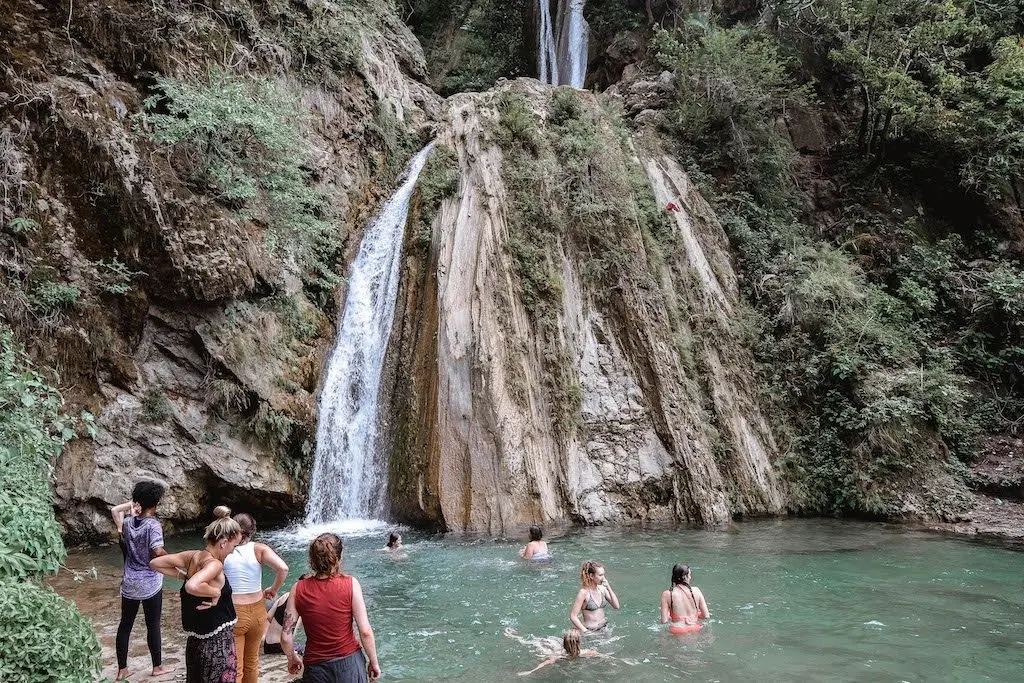
Nestled in the hills above Rishikesh, the Neer Garh Waterfall is truly magnificent. This amazing waterfall, which pours down a rock up to 25 feet high, is the result of three great waterfalls coming together.
Since the area around the waterfall has not been impacted by civilization, you might get a natural and unadulterated experience.
It takes fifteen minutes to walk the paths through the thick forest reach this waterfall. There are two bridges and a stream of water along the routes you would go.
The area is also home to a diverse array of flora and fauna. If you bring food, water, and a mat, you may make your hike into a little picnic. This will enable you to get some stunning images of the region. You will have an unparalleled experience in this part of Rishikesh.
If you are looking for an Offbeat place like this in Himachal, there is Tani Jubbar Lake in Narkanda, which provides a similar experience and you can also do snow sports activities in Narkanda, which is the only authorised snow sports activity in Himachal, like skiing.
Ram Jhula, Laxman Jhula & Janki Setu
Ram Jhula
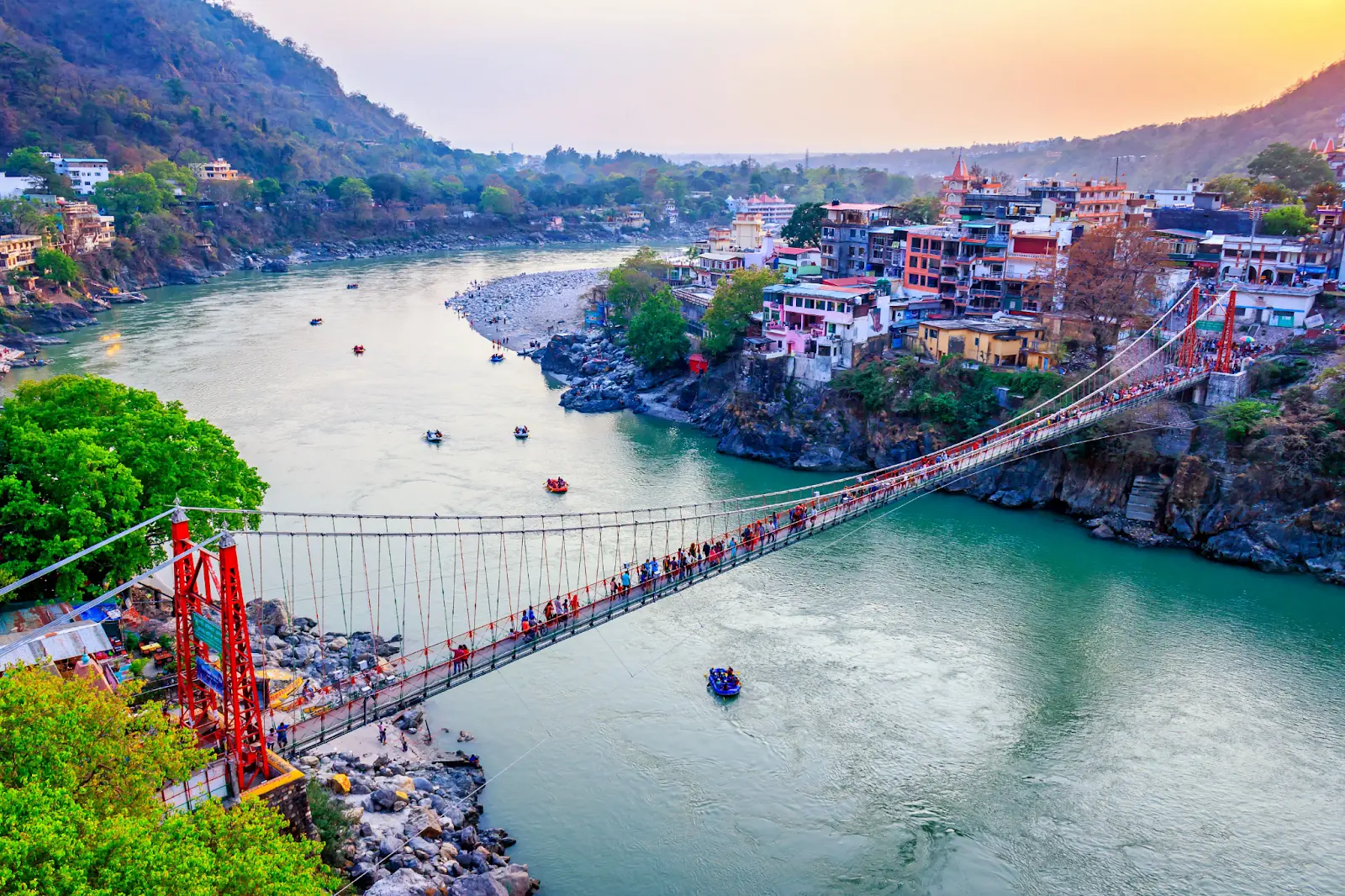
Much more than a suspension bridge. Imagine this: High over the magnificent Ganga River, you are standing on a bridge. A cold, refreshing breeze is blowing, revitalizing your body, mind, and spirit. However, while you take in the breath-taking views of the surroundings and enjoy the wind, the bridge also begins to gently shake beneath your feet. It's one of those infrequent encounters that you won't quickly forget.
The magnificent Ram Jhula, which means 'swing' in Hindi, is a well-known hanging bridge located in the center of Rishikesh. One of the most significant deities in Hindu mythology, Lord Rama, is honored by the name of this famous bridge. It spans 450 feet and creates a calm walkway for pedestrians by joining the two banks of the Ganga. Bicycles and two-wheelers are permitted on the bridge, however four-wheelers are not permitted. As you cross the bridge, you will be treated to panoramic views of the river below, the lush hillsides, and the myriad temples dotting the riverbanks.
Lakshman Jhula
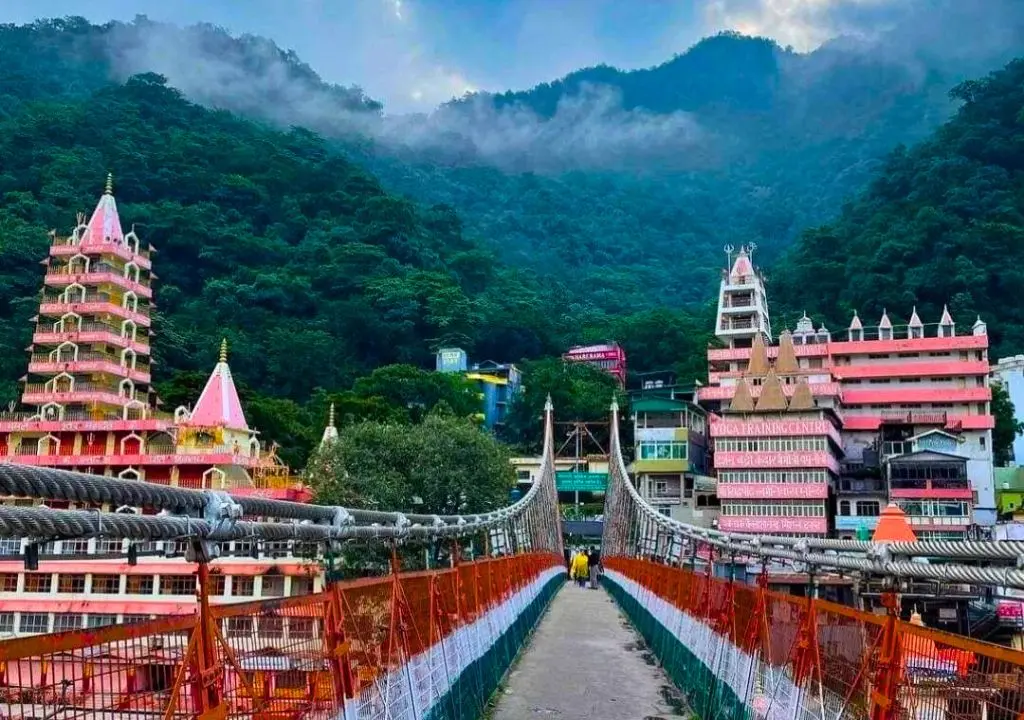
The magnificently built Lakshman Jhula is a popular tourist destination that Indian visitors with visas typically visit first. Great views of the entire station are available from a huge iron bridge that spans the silent Ganges.
After the old scaffold was damaged in a surge in 1924, the current addition was constructed between 1927 and 1929. For this scaffold, Rai Bahadur Shewpershad Tulshan paid for its construction. On April 11, 1930, Lakshman Jhula launched for business. The Lakshman Jhula is becoming one of Rishikesh's most popular tourist destinations.
It includes stores, restaurants, hotels, ashrams, and yoga retreats. From the scaffold, one can see the stunning Ganga stream and the lower Himalayan ranges. There is a little market on both sides where people can search for resources, jewels, and other items.
Janaki Setu Bridge Rishikesh

Trivendra Singh Rawat, the chief minister of Uttarakhand, has launched Janaki Setu. Rishikesh has benefited greatly from this. The state's Tehri and Pauri districts would be connected by it. It began construction in March 2013 and is now open to the public. It has been waiting a long time to open. This 274-meter-long bridge is situated across the Ganges River.
The Janaki Setu, which is presently being constructed in the Ganges between Kailash Gate and Ved Niketan, will be Uttarakhand's first three-lane bridge. On either side of this bridge, a foot lane will be constructed, with one lane leading in and the other out. However, there will be enough for carts and two-wheelers in the center. Nonetheless, the bridge's load capacity is appropriate for four-wheelers. Nevertheless, only in certain circumstances would the vehicles be permitted to cross the bridge. The bridge's three-lane dividers can be opened for four-wheelers in certain situations, according to Mo Arif Khan, Executive Engineer, PWD.
The Beatles Ashram
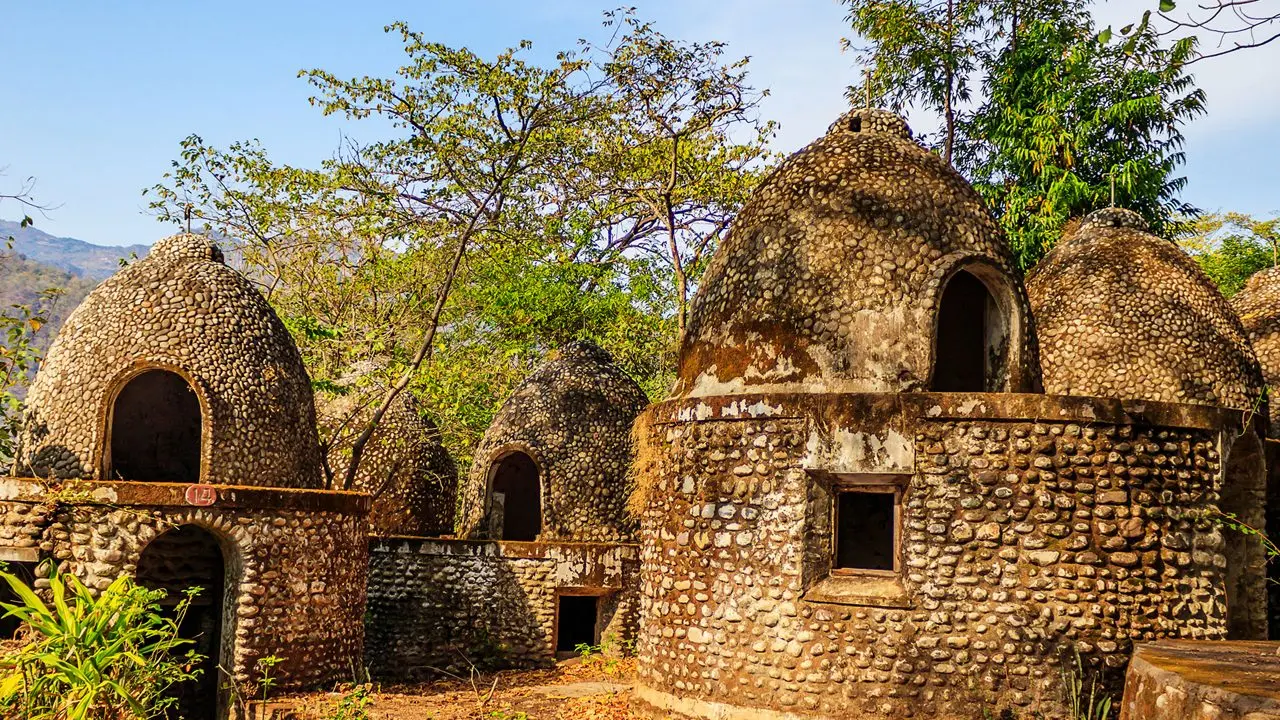
Beatles in the world's yoga capital. 'When you look up at the sky and see a cloud, think of me.'
One of the Beatles' most well-known tracks from their White Album. Additionally, graffiti at a charming, enchanted location amid Rishikesh's tranquil woodlands. But hold on. Why are the lyrics to a Beatles song in a forest close to Rishikesh? What does the Beatles have to do with a hallowed location that is referred to as the world's yoga capital?
The answer lies at the Chaurasi Kutia Ashram (Sanctuary of 84 cottages), commonly known as the Beatles Ashram.
Inspired by meditation, Indian mysticism, and Maharishi Mahesh Yogi's teachings, the Beatles set off on a life-changing adventure in Rishikesh. The band's most prolific period as composers coincided with their visit to the 'Chaurasi Kutiya Ashram', where they engaged in transcendental meditation. While there, they wrote most of the songs for their well-known self-titled double album, which is also known as the 'White Album.'
The Beatles lived at this ashram from February to April of 1968, and it was abandoned a few decades after their departure. The site, which offers a glimpse into the band's historic journey, has become a popular destination for Beatles enthusiasts after being abandoned for years beginning in the 1990s.
Things to do in Rishikesh
“Life is like the river, sometimes it sweeps you gently along and sometimes the rapids come out of nowhere.”
― Emma Smith
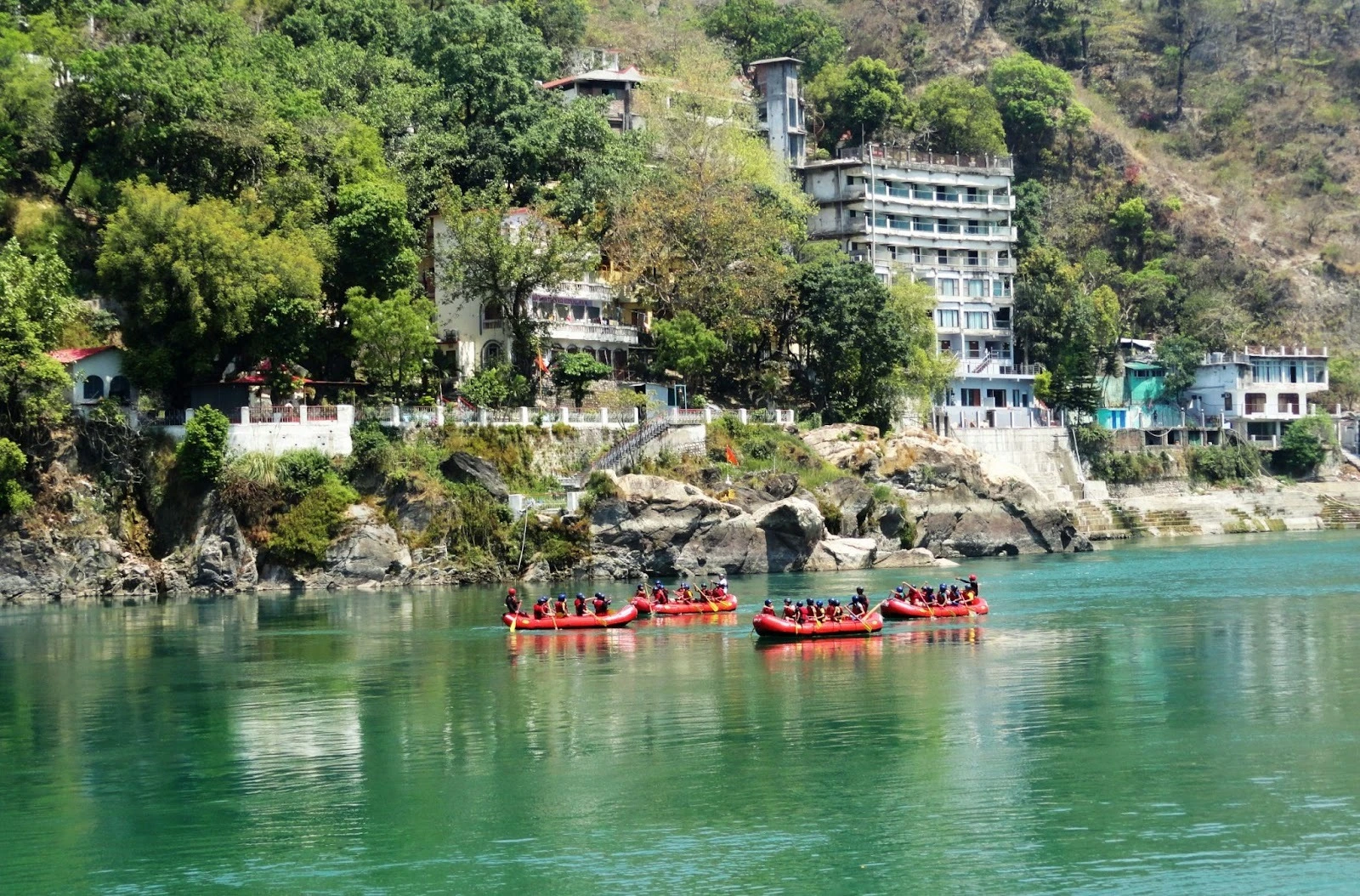
In the middle of rushing rapids, river rafting is an unparalleled thrill that provides an adrenaline rush. A rafter makes its way through a river in this exciting and difficult adventure sport. Around the world, there are numerous locations for river rafting. There are numerous locations in India that provide river rafting experiences. Perhaps the greatest place to go rafting in India is Rishikesh, the country's rafting capital. There is a ton of room for rafting here due to the Ganges' turquoise waters.
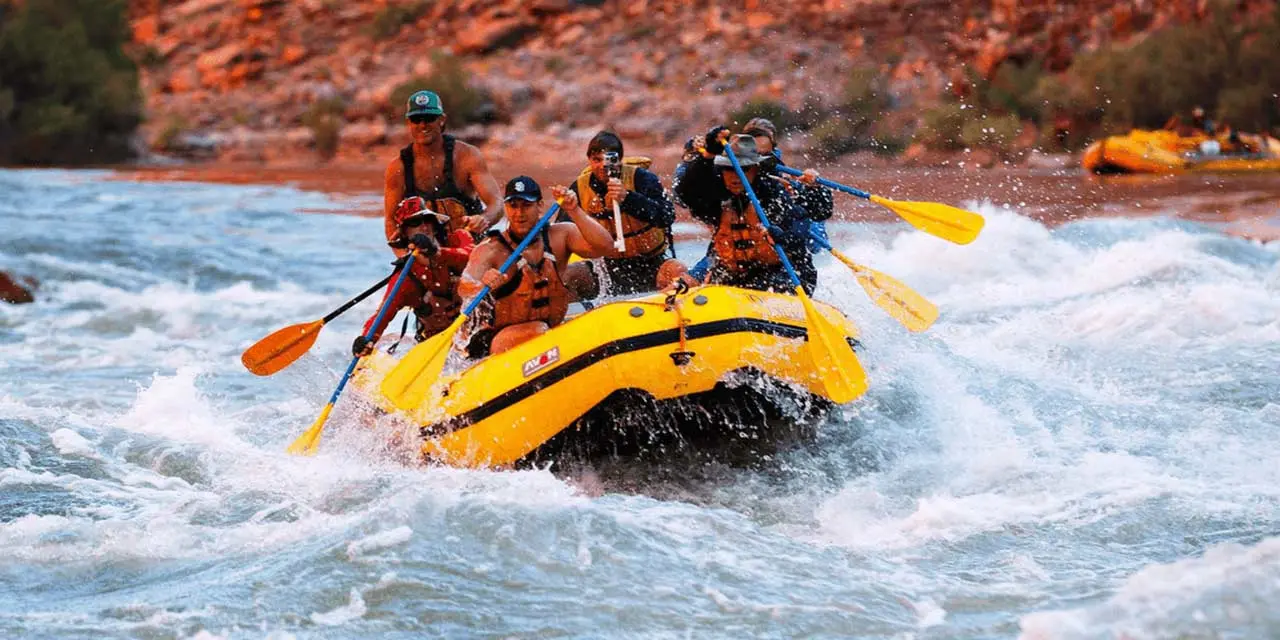
Rishikesh provides the ideal rafting experience for every adventurer, regardless of skill level. The absolutely gorgeous surroundings add even more excitement to this. All rafters can easily select the expedition based on their skill level thanks to the numerous rapids spread across various grades and stretches. Let's examine every significant facet of rafting in Rishikesh.
The many fast grades in Rishikesh are as follows:
Depending on how challenging they are, the rapids are categorised into groups. There are six different grades of rapids in the world. In Rishikesh, there are five distinct fast grades:
Grade 1: Navigating gentle torrents is simple. There is really little risk.
Grade: 2: Provides easy manoeuvrability and holds rocks or barriers apart noticeably.
Grade: 3: Quite daring rapids that call for sound judgment.
Grade: 4: The raft could be overturned by these powerful rapids.
Grade 5. Dangerous rapids, only for professionals.
Choose the Right Rafting Stretch: Rishikesh offers different rafting routes beased on difficulty level:
Brahmpuri to Rishikesh (9km) - Beginner
Shivpuri to Rishikesh (16km) - Moderate
Marine Drive to Rishikesh (9km) - Challenging
Kaudiyala to Rishikesh (9km) - Expert
Bungee Jumping in Rishikesh
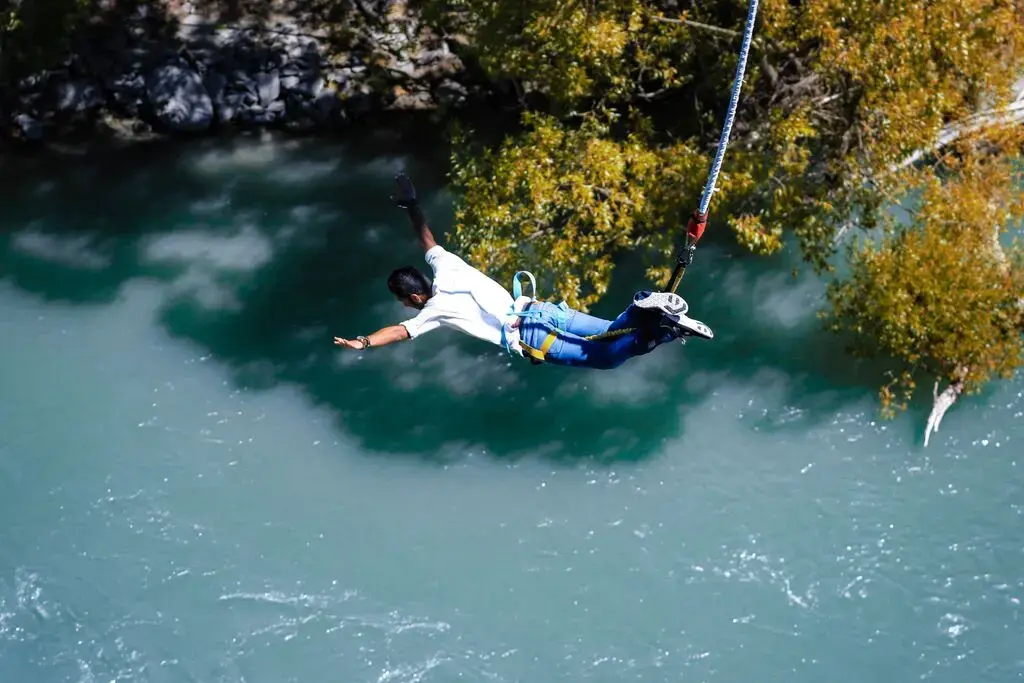
Jumping from a height while wearing a long elastic string fastened to your body is known as 'bungee jumping' or 'bungy jumping.' Usually, a bridge, crane, or construction site serves as the elevated location. The freefall and the bounce back are what create the exhilaration. When someone jumps, the cord expands, and when the jumper lands, the cord retracts, sending them flying again. The jumper keeps moving up and down until all of the force has been released.
Minimum Requirements :
Age for Bungee Jumping: Minimum -12 years
The minimum weight for bungee jumping is 40 kg, and the maximum weight is 110 kg.
These are the best places to visit during your trip to Rishikesh and the best things to do while roaming around. If you want to visit similar places, you can check Places in
Explore More Offbeat Destinations with Boonies
If you love discovering offbeat places, quiet mountainsides, and hidden gems beyond the usual tourist trails, Boonies.in is made for you. From serene Himachal valleys to untouched Himalayan villages, we bring you carefully curated stays and experiences that let you explore nature at its purest. Whether you're seeking peaceful retreats, adventure getaways, or authentic local culture, Boonies helps you find destinations that feel raw, real, and refreshing.
Visit boonies.in to explore handpicked mountain escapes and start planning your next unforgettable journey.
Boonies in Narkanda offers the ideal fusion of luxury and unadulterated Himalayan beauty, whether you're planning a romantic vacation, a family vacation, or a peaceful retreat.
Discover more and reserve your stay at Boonies.in, where comfort, style, and life-changing events collide with Narkanda's mountains.
Best Cafe in Manali
Manali’s Most Instagrammable Cafés You Must Visit
Table of Contents
- •Best Time to Visit Rishikesh.
- •Places to visit in Rishikesh
- •Neelkanth Mahadev Temple
- •Rishikesh's Triveni Ghat: Triveni Ghat Ganga Aarti
- •Vashishta Gufa / Vashishta Cave, Rishikesh
- •Neergarh Waterfall
- •Ram Jhula, Laxman Jhula & Janki Setu
- •Ram Jhula
- •Lakshman Jhula
- •Janaki Setu Bridge Rishikesh
- •The Beatles Ashram
- •Things to do in Rishikesh
- •Bungee Jumping in Rishikesh
Recent Blogs
Manali’s Most Instagrammable Cafés You Must Visit
Best Places to Visit in Manali for Nature, Temples, and Views
Where to Eat, Chill, and Work: The Best Cafes in Jibhi
10 Must-Visit Spots in Tirthan Valley and Jibhi for Your Next Mountain Escape
Why Travelers Are Choosing Homestays Over Hotels